
Blog

September 30, 2026
How to Include Parents Who Don't Speak English in IEP Meetings
Identify the family's language early, send the invitation and key documents in that language, book a qualified interpreter for the full meeting, and follow up in writing in the parent's language.
September 25, 2026
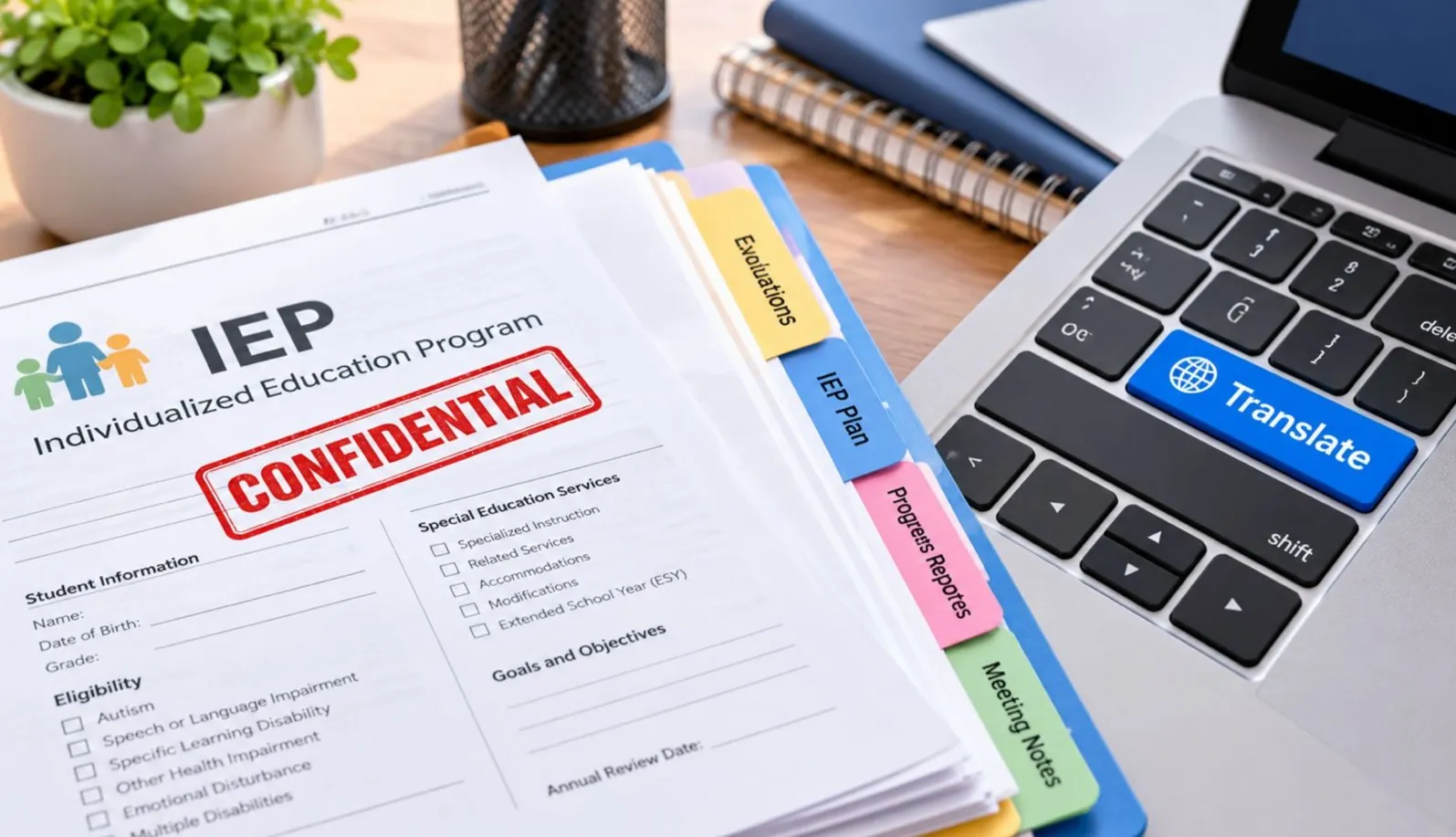
How to Translate an IEP Document
Start from the final version, give a qualified special education translator the district's glossary, translate for meaning rather than word for word, and have a second linguist check every service detail.

September 23, 2026
Special Education Acronyms Every Educational Interpreter Should Know
In an IEP meeting, acronyms arrive fast, sometimes spoken as words and sometimes spelled out. An interpreter who cannot recognize them instantly can change what a family understands about a decision.

September 20, 2026
Is an Interpreter Needed at the IEP Meeting?
Yes. If you are deaf or your native language is not English, your school district must arrange an interpreter for your child's IEP meeting, at no cost to you.

September 17, 2026
Translating Family Resource Guides: What School Districts and Nonprofits Should Know
A family resource guide is a complete publication, not a single form. Planning the translation before the first sentence is translated gives families clearer access to services and support.

September 16, 2026
Why School Districts Need a Translation Style Guide and Glossary
A style guide and glossary give a district a shared reference so staff, translators, reviewers, and vendors use the same approved language across IEPs, evaluations, and family communications.

August 3, 2026
What Is an IEP and Why Is Accurate Translation Important?
An IEP is the legal plan behind a child's special education. For families who read in another language, accurate translation is what makes that plan truly readable.

August 3, 2026
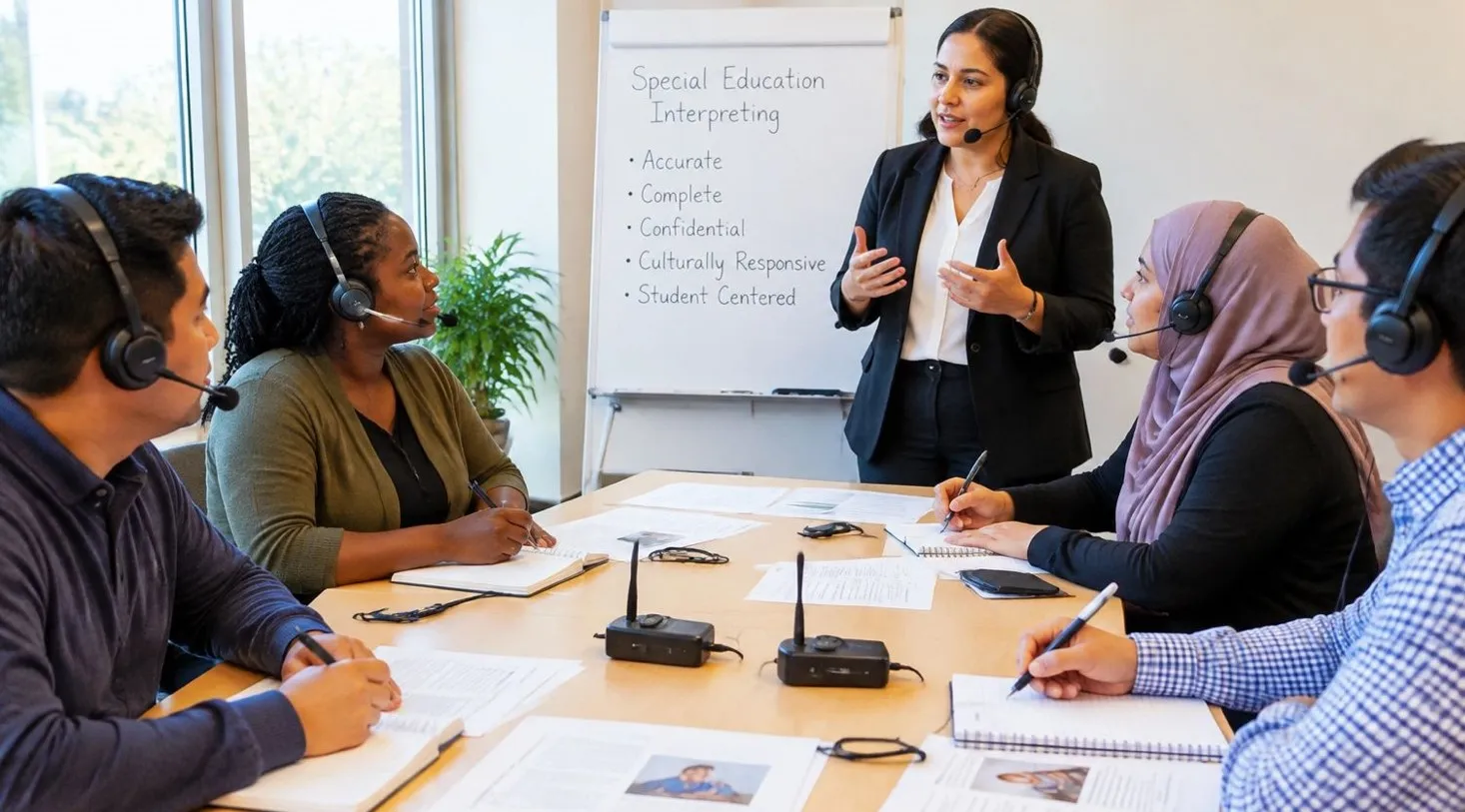
Why Professional Interpreters Are Critical for IEP Meetings
Sitting in an IEP meeting can feel overwhelming even in your first language. Now imagine following the conversation in a language you're still learning.
June 5, 2026
When Fluency Is Not Enough: What Every School District Needs to Know Before the Next IEP Meeting
A fluent bilingual staff member without training typically delivers about 70 percent of an IEP message. The missing 30 percent is where the legal meaning lives.

May 7, 2026
Translation vs. Interpretation: What Every District Interpreter, Translator, and Bilingual Staff Member Needs to Know
Translation is for the written word and interpretation is for the spoken word. Districts need qualified professionals in both roles, and the difference is a training gap.