
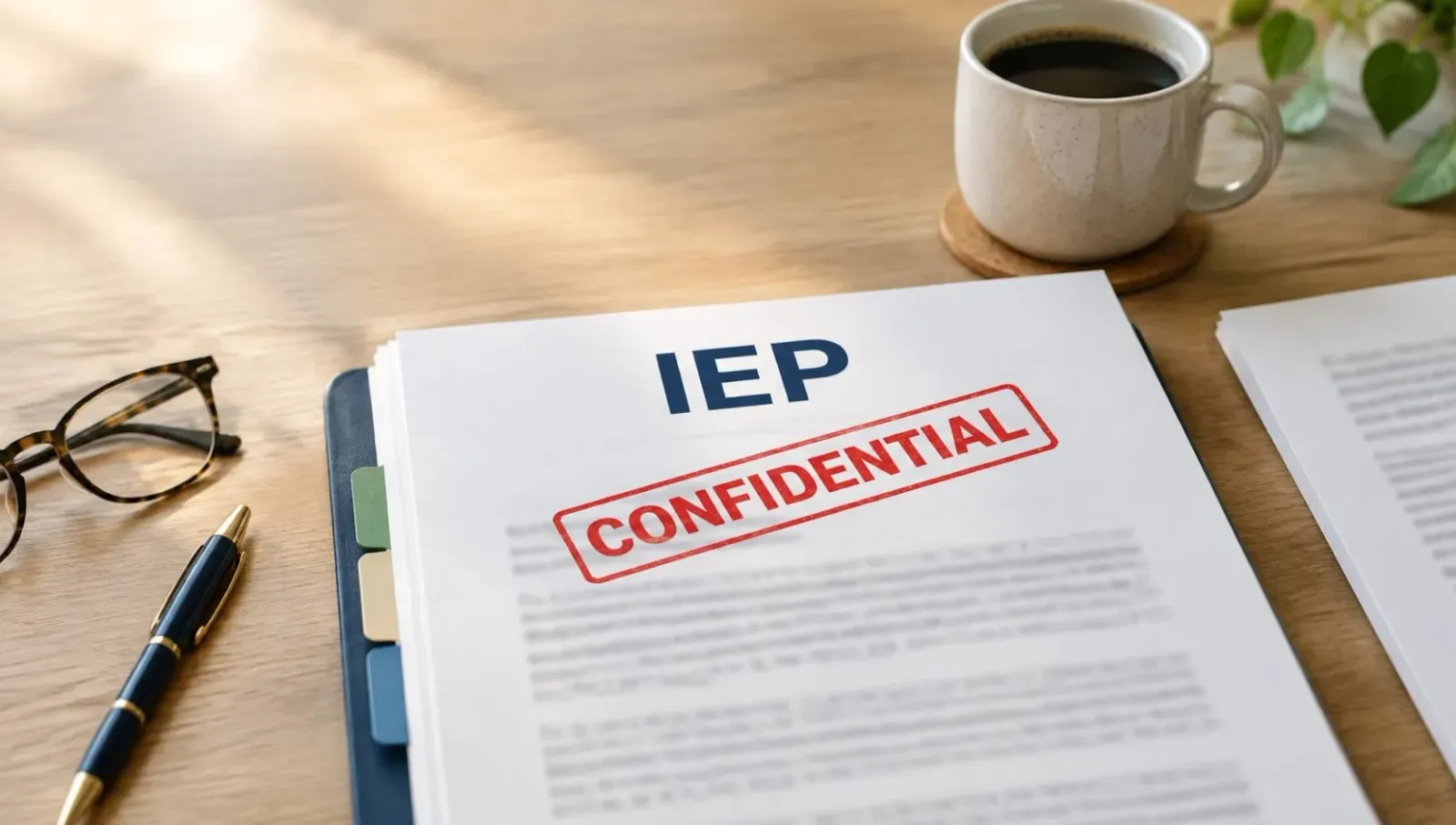
If your child has been evaluated for special education services, you've probably heard the term "IEP" more times than you can count, often without anyone stopping to explain what it actually means. For parents who don't speak English as a first language, that gap gets even wider: understanding an IEP isn't just about knowing the words, it's about understanding what's being decided for your child.
What Is an IEP?
An IEP, or Individualized Education Program, is a legal document that outlines a child's current abilities, the goals the school and family agree to work toward, and the specific services and accommodations the child will receive to reach them. It's reviewed and updated regularly to make sure it still reflects what the student needs.
Who's Involved in Creating an IEP
An IEP is built by a team, teachers, school psychologists, special education staff, and the child's parents or guardians. Parents aren't just informed of the plan; they're supposed to be equal participants in shaping it, which only works if they can fully understand what's being discussed and written.
What's Inside an IEP Document
While every IEP is different, most include a few core parts:
- A summary of the child's current academic and developmental levels
- Measurable annual goals
- The specific special education and related services the child will receive
- Accommodations or modifications for the classroom
- How and when progress will be measured
Each of these sections uses precise language, the kind where a small mistranslation can change what a parent thinks their child is entitled to.
Why Accurate Translation of an IEP Matters
When an IEP is translated into a parent's language, it isn't a nice-to-have, it's what allows that parent to actually read the document their child's education depends on, instead of relying on someone summarizing it out loud in the hallway after a meeting.
What Can Go Wrong With an Inaccurate Translation
Special education terminology often doesn't have a clean, direct equivalent between languages. A translator without background in this field can accidentally soften or shift the meaning of a goal, a diagnosis, or a service description, sometimes in ways that aren't obvious unless you already know the subject matter. At Spectrum Translations, our document translation service exists specifically to avoid that gap, translating IEPs, evaluation reports, prior written notices, and meeting summaries with attention to how these documents are actually used by families and schools.
Translation vs. Interpretation, Your IEP Needs Both
Translation and interpretation work together, but they're not the same thing, translation is written and interpretation is spoken (learn more about the difference between translation and interpretation), and families may need both at different points in the IEP process. Translation is turning the IEP document itself into your language so you can read it closely, on your own time. Interpretation is someone converting the live conversation during the IEP meeting itself so you can participate in real time. This article is really about the document you take home afterward.
Get Your Child's IEP Accurately Translated
An IEP shapes your child's education, and you deserve to read it in a language you fully understand. Request a free quote to have your child's IEP or related documents translated accurately.
Frequently Asked Questions About IEP Translation
What does IEP stand for?
IEP stands for Individualized Education Program. It is the legal document that outlines a child's current abilities, the goals the school and family agree to work toward, and the services and accommodations the child will receive.
Is a school required to translate my child's IEP into my language?
Schools are generally required to provide meaningful language access for parents with limited English proficiency, which can include translated documents. Requirements and processes can vary by school and district, so it's worth confirming directly with your child's school what they provide, and reaching out to us if you'd like to arrange your own document translation as well.
What's the difference between an IEP and a 504 Plan?
Both provide support for students with disabilities, but an IEP includes specialized instruction and specific services tied to one of a defined set of disability categories, while a 504 Plan focuses more broadly on accommodations that give a student equal access to the general classroom. If you're not sure which one applies to your child, that's a good question to bring directly to the school team.
Can I get just the IEP translated without arranging interpreting for the meeting, or vice versa?
Yes. Document translation and meeting interpretation are separate needs, and a district may arrange one, the other, or both depending on the family's circumstances. Spectrum Translations provides document translation for IEPs and related materials.
Who translates IEP documents at Spectrum Translations?
IEP and special education documents are translated by our team, led by Sandra Ledesma, a California Certified Court Interpreter who has worked in special education translation and interpretation since 2008.